Digital Nomad Communities in 2026: How Technology Is Redefining Social Connection
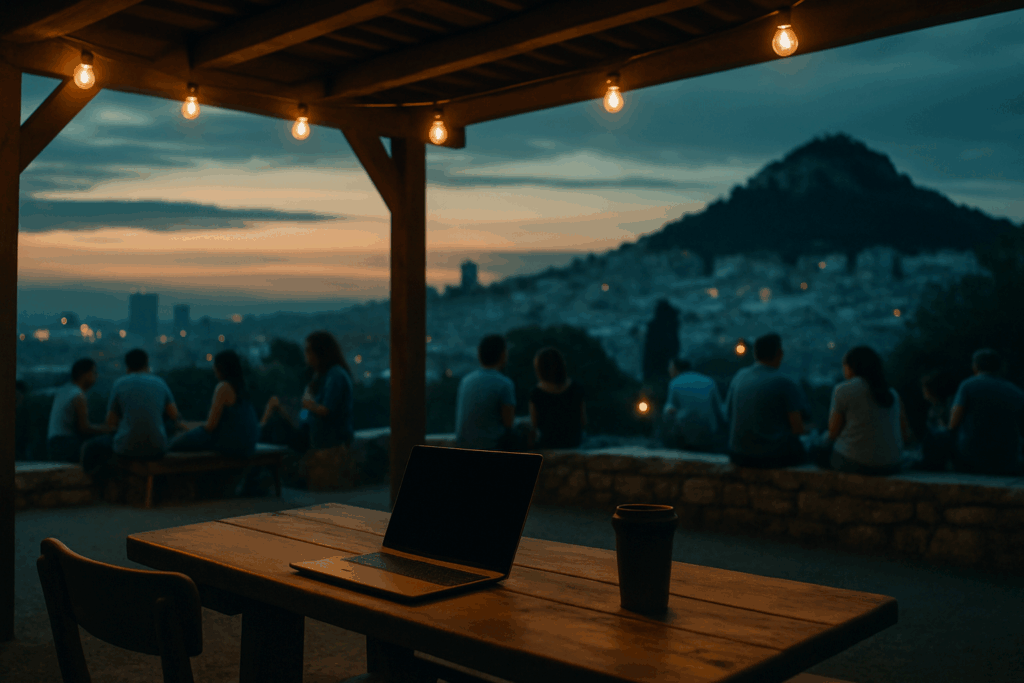
Digital nomads build community through dedicated platforms, co-living spaces, and structured virtual networks. Technology enables persistent social connections across locations. The core challenge is not finding people — it is creating depth and continuity in relationships formed while constantly moving.
Over 35 million people now identify as digital nomads globally. Yet despite constant connectivity, social isolation remains their most reported challenge. Community infrastructure — not Wi-Fi speed — is the defining factor in nomad quality of life. This article maps the platforms, spaces, and behavioral frameworks that are actively solving the social connection problem for remote workers in 2026.
Understanding Digital Nomadism and Its Social Implications
Digital nomadism is location-independent work combined with continuous travel or relocation. The lifestyle has shifted from solo freelancing to community-first living.
A digital nomad earns income remotely and has no fixed home base. Early nomads optimized for freedom. The 2026 nomad optimizes for belonging. This shift reflects a maturation of the lifestyle — people who have traveled for years now prioritize recurring community over novel destinations. The social structure of nomadism has evolved from scattered individuals using Facebook groups into organized networks with physical infrastructure, governance, and shared identity. Remote work dynamics have normalized location flexibility, which means nomadism is no longer a fringe behavior — it is a mainstream lifestyle choice with measurable community needs. Platforms and co-living operators have responded by designing environments specifically for social engagement, not just accommodation.
The Role of Technology in Shaping Digital Nomad Communities
Technology does not replace in-person connection — it scaffolds it. The most effective nomad communities use digital tools to coordinate physical gatherings.
Messaging platforms like Telegram and Discord serve as the operational backbone of nomad communities. They enable city-specific channels, event coordination, and peer support in real time. Beyond messaging, dedicated platforms have emerged as community hubs. GoLoca Communities connects nomads with curated local networks and shared living environments. Nomad List aggregates city data and hosts forums. Slack-based communities like Remote Year Alumni maintain long-term relationships after programs end. The most important technological shift is asynchronous community infrastructure — tools that allow members to contribute and receive value across time zones without requiring simultaneous presence. This solves the core problem of transient schedules disrupting social continuity.
The Psychological Impact of Community on Digital Nomads
Loneliness is the most cited downside of nomadic life. Research confirms it has measurable effects on productivity, decision-making, and mental health.
A 2023 APA study confirmed chronic loneliness increases cortisol levels and impairs cognitive performance. For nomads, the transient lifestyle interrupts the repeated interactions required to form trust-based relationships. Community engagement — defined as regular, reciprocal participation in a shared group — directly counters this effect. Nomads embedded in structured communities report higher life satisfaction and lower anxiety than solo travelers. The mechanism is simple: **predictable social touchpoints reduce the cognitive load of constant novelty**. Co-living spaces with programmed social events, recurring virtual calls, and shared accountability structures replicate the relationship depth of fixed communities. The key variable is repetition, not proximity.
Exploring Innovative Co-Living and Co-Working Solutions
Co-living spaces have evolved beyond shared apartments. The best operators now design for social infrastructure as deliberately as they design for physical space.
Successful co-living models share three features: curated cohorts, programmed social time, and digital continuity after departure. Selina operates across 100+ locations and builds community through events, shared kitchens, and nomad-specific programming. Sun and Co in Jávea, Spain runs themed co-living weeks with workshops and structured dinners. Outpost in Bali maintains alumni networks that keep past residents connected. GoLoca’s platform extends this model by connecting nomads with vetted communities before they arrive — reducing the cold-start problem of entering a new city alone. The most effective spaces treat community as a product, not a side effect. They measure social engagement metrics alongside occupancy rates.
Challenges of Loneliness and Social Isolation in Remote Work
Social isolation in remote work is structural, not personal. It results from the absence of repeated, low-effort social contact — the kind offices and fixed neighborhoods provide automatically.
Nomads report the highest isolation at two points: immediately after arriving somewhere new, and after leaving a strong community. The first week in a new city is the most vulnerable. Without a deliberate entry strategy, nomads default to solo work routines that compound isolation. Innovations addressing this include arrival buddy systems, city-specific onboarding channels, and co-living intake calls that match residents before arrival. Read more about how community strategies are evolving for nomads in 2026. The structural fix is reducing friction at the point of entry — making the first social interaction automatic, not effortful.
Future Trends: Predictions for Digital Nomad Communities
The next phase of digital nomad community infrastructure will be more persistent, more data-informed, and increasingly integrated with physical space.
Three trends are converging. First, AI-powered community matching will replace keyword-based searches — platforms will identify compatible nomads based on work style, schedule, and social preferences. Second, digital nomad visas are expanding globally, creating legal infrastructure that supports longer stays and deeper community investment. As of 2026, over 50 countries offer structured nomad visa programs. Third, hybrid co-living models are emerging — spaces that maintain digital community layers between physical stays, allowing members to remain connected across locations. The demand shift is toward quality of community over quantity of destinations. Nomads are staying longer in fewer places, which increases community depth and reduces the social reset cost.
Lesser-Known Platforms Reshaping Nomad Community Building
Beyond Nomad List and Meetup, a set of niche platforms are building tighter, more intentional communities for specific nomad demographics.
Mainstream platforms optimize for scale. Niche platforms optimize for fit. Wifi Tribe runs small-group nomad experiences — 15 to 20 people — with a strong alumni network. Hacker Paradise targets developers and designers with structured co-working trips. Women-specific communities like Wanderful address safety, networking, and peer support needs not met by generic nomad spaces. Location-specific Discord servers for cities like Tallinn, Tbilisi, and Medellín have become the most active real-time community infrastructure for arriving nomads. Sustainable community frameworks increasingly draw from these niche models — small cohorts, shared purpose, and deliberate onboarding.